


Brewer’s spent grain (BSG) is the largest by-product of the brewing industry. Although it contains valuable protein, using this resource in food products remains challenging. The recovered proteins can have low purity, limited solubility and grassy or earthy flavours.
Researchers from the @University of Hohenheim (UOH) and @CentraleSupélec (CS) are exploring how fungal fermentation can improve these properties and make proteins from brewer’s spent grain more suitable for food applications.
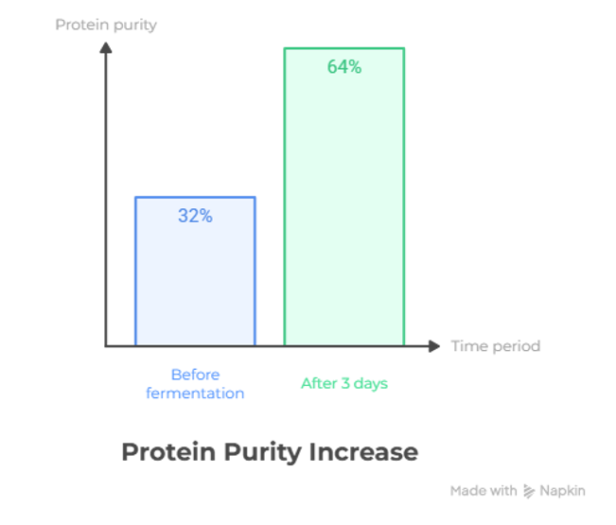
The study tested different fungal strains to investigate how they affect protein quality and functionality. The results showed that Trametes versicolor and Coprinellus micaceus increased protein purity from 32% to 64% within three days. Protein solubility also increased two- to threefold, alongside improvements in functional properties, particularly emulsifying performance.
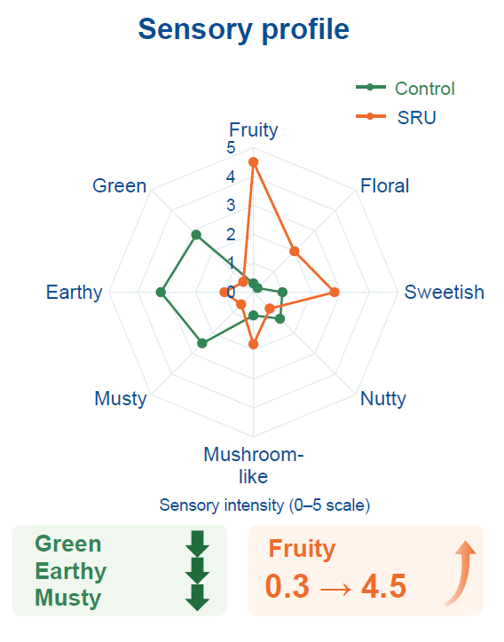
Another strain, Stropharia rugosoannulata, changed the flavour profile of the BSG-derived protein fractions during fermentation. Grassy and earthy notes were reduced, while new fruity esters were detected.
By improving the quality and functionality of proteins from brewing by-products, this approach could contribute to more efficient use of food industry side streams.
Read the full research abstract: HERE.
 This work was funded by the European Union’s Horizon Europe programme as part of project PROTEIN4IMPACT (Grant Agreement No. 101182324). Views and opinions expressed are, however, those of the author(s) only and do not necessarily reflect those of the European Union or the European Research Executive Agency (REA). Neither the European Union nor the granting authority can be held responsible for them.