

What Do You Feed a Mealworm?
How Different By-Products Shape Insect Biomass?
When using insects as a source of protein, what they are fed can influence both their growth and the composition of the resulting biomass.
Researchers from ENEA explored these questions by investigating three by-products – brewer’s spent grain, cocoa bean shells and banana peels – as rearing substrates for yellow mealworm larvae (Tenebrio molitor). The study also examined how supercritical CO₂ extraction could be used to separate the lipid fraction from the resulting insect biomass, producing protein-enriched meals.
The findings show that the choice of rearing substrate matters. After 28 days, larvae fed diets based on brewer’s spent grain and banana peels achieved weight gains comparable to those fed a conventional wheat bran diet, while the cocoa bean shell-based diet resulted in lower weight gain and feed intake.
The substrate also influenced the nutritional composition of the larvae. Those reared on the brewer’s spent grain-based diet had the highest protein content (60.4%), whereas larvae fed the cocoa bean shell-based diet had the highest lipid content (29.3%).
What happens after rearing?
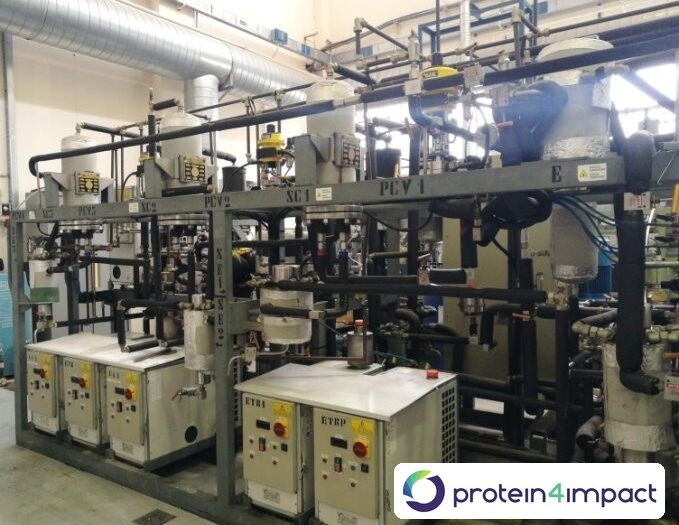
To investigate further uses for the biomass, the researchers applied supercritical CO₂ extraction to separate its lipid fraction. This produced two fractions: an oil-rich extract and a remaining meal with a higher protein content.
After extraction, protein made up 68.5% of the meal from larvae fed brewer’s spent grain, 50.3% of the meal from larvae fed cocoa bean shells and 60.2% of the meal from larvae fed banana peels. The extracted oils were rich in unsaturated fatty acids, particularly oleic acid.
The results show that insect biomass can provide both a protein-rich meal and an oil-rich extract. The results also highlight the importance of considering both the rearing substrate and the subsequent processing steps when exploring the potential of insect-derived ingredients.
Read the full scientific publication: Agro-Industrial By-Products as Rearing Substrates for Tenebrio molitor: Effects on Biomass Composition and Valorization Through Pilot-Scale Supercritical CO₂ Extraction
 This work was funded by the European Union’s Horizon Europe programme as part of project PROTEIN4IMPACT (Grant Agreement No. 101182324). Views and opinions expressed are, however, those of the author(s) only and do not necessarily reflect those of the European Union or the European Research Executive Agency (REA). Neither the European Union nor the granting authority can be held responsible for them.