

From Alternative Protein Sources to Novel Foods
One of the key objectives of PROTEIN
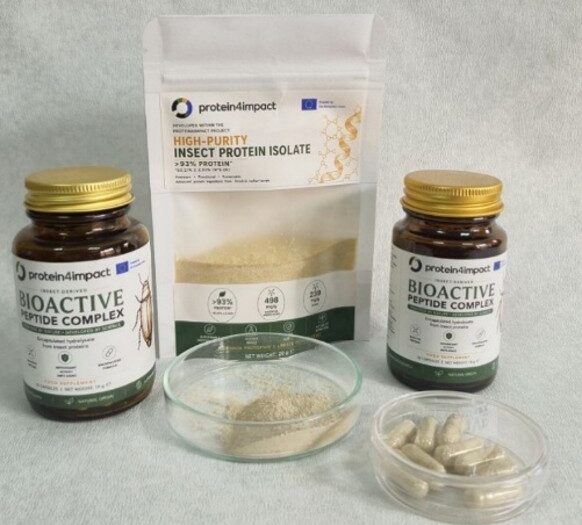
For the production of protein powders intended for further food applications, Tenebrio molitor was selected as one of the primary raw materials due to its naturally high protein content. Moreover, the project also evaluates several other alternative protein sources, including proteins recovered from aquaculture by-products, mycoprotein from Pleurotus ostreatus, and microalgal protein obtained from Dunaliella salina.
For the production of protein powders intended for further food applications, Tenebrio molitor was selected as one of the primary raw materials due to its naturally high protein content. Moreover, the project also evaluates several other alternative protein sources, including proteins recovered from aquaculture by-products, mycoprotein from Pleurotus ostreatus, and microalgal protein obtained from Dunaliella salina.
Building on these raw materials, high-protein isolates are subsequently processed into protein hydrolysates. To improve their functionality, the hydrolysates are encapsulated, providing greater protection and stability of bioactive compounds while also improving sensory and functional properties. Encapsulated formulations have shown promising results, including increased antioxidant activity.
The resulting protein powders and ingredients can then be incorporated into protein-enriched novel food products. The overall objective is to develop foods with acceptable or enhanced functional, sensory, and nutritional characteristics. Therefore, various technological properties, including shape, colour, texture, and crispness, are assessed during product development. Sensory analysis evaluates taste, aroma, and overall consumer acceptance. In parallel, the nutritional quality of the products is thoroughly analysed, including moisture content, ash, protein and fat levels, carbohydrates, dietary fibre, and caloric value. One of the most promising findings was that the novel food product formulated with Tenebrio molitor protein achieved the highest sensory scores while also exhibiting the lowest caloric value among all formulations evaluated.
Through this integrated approach, PROTEIN
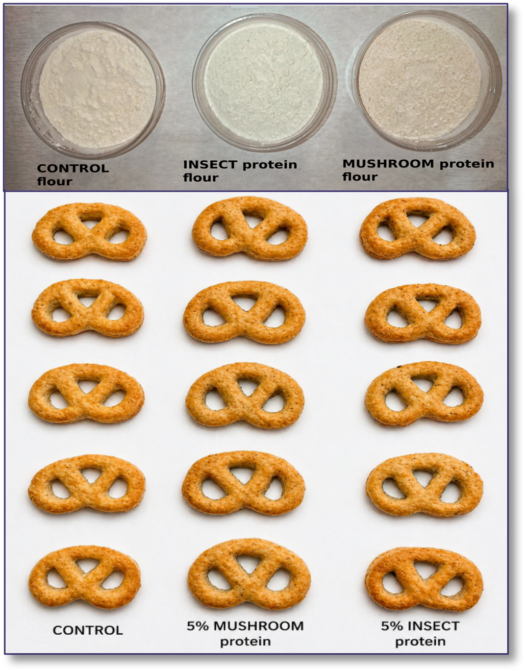
Comparison of Individual Samples (Venus Roses Lab Solutions).
 This work was funded by the European Union’s Horizon Europe programme as part of project PROTEIN4IMPACT (Grant Agreement No. 101182324). Views and opinions expressed are, however, those of the author(s) only and do not necessarily reflect those of the European Union or the European Research Executive Agency (REA). Neither the European Union nor the granting authority can be held responsible for them.